Introduction
Hello everyone! I’m Samuel Gallego Pintado, I’m excited to share my final report for the WP Credits course, which challenged me to make real contributions to the WordPress open-source community while also building my own personal website from scratch.
This report summarises the contributions I made, the resources I used, the challenges I faced, and everything I learned throughout this experience. I hope it helps anyone who is thinking about joining the WordPress community for the first time!
Teams and Projects I Contributed To
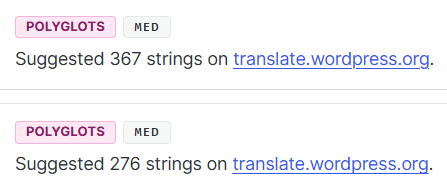
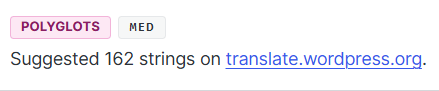
I joined the WordPress Polyglots team, which is responsible for translating WordPress themes, plugins, and the core into different languages. My contributions focused on Spanish (es_ES) translations, where i suggested a total of 805 strings.
My main goal was to make these themes fully accessible to Spanish-speaking users by providing accurate, natural translations that followed the official WordPress España style guide, including correct tone, terminology, and formatting conventions.
Learning Resources
WordPress Polyglots Handbook: the main guide for contributors who want to translate WordPress content.
WordPress España Glossary and Style Guide: essential for understanding the correct terminology and tone to use in Spanish translations.
GlotPress: the official platform used to submit and review translations.
WordPress Themes Trac: useful for finding the context behind specific strings, especially for technical or code-related ones.
Challenges and Solutions
– String context: Many strings had no visual context, so terms like «Preloader» or «Header Lean» were ambiguous. I solved this by checking the theme’s PHP files in WordPress Themes Trac and the live demo.
– Marketing copy: Phrases like «Unlock the mystery within now» lose their feel when translated literally. I focused on matching the tone in Spanish rather than translating word by word.
– Technical placeholders: Some strings contained variables like %s or %1$s that must not be translated. I followed GlotPress warnings and compared my translations with already approved strings in the same project.
My Contributions
I suggested a total of 805 strings to these themes:
Bold Photography Blocks, Escape Room Game, Kawaii-Chan, Nighspot, Personal CV Resume, Pool Services Lite, and Spectra One.
All translations were submitted through translate.wordpress.org and followed the WordPress España style guide conventions.
In addition to translation work, I have been developing my own personal website using WordPress, which served as a practical parallel project throughout the course. I built the homepage with sections including: an «About me» block and a skills section with programming language icons. I also created a blog page where i posted updates about my progress and a contact page.
Key Learnings from the WP Credits Course
This course taught me several things that I will carry forward in my career. Open-source contribution is more accessible than it looks. Before joining Polyglots, I thought contributing to WordPress required advanced coding skills. In reality, translation is a great entry point that anyone with language skills can do.
Context matters more than vocabulary, a good translation is not just a correct one, it has to feel natural and fit the visual and functional context of the product.
WordPress has a strong, welcoming community. The Polyglots community is collaborative and organised, with clear guidelines that make it easy to get started and improve over time.
New Skills Gained
Technical skills:
– Using GlotPress to submit and manage translations.
– Reading PHP files in WordPress Themes Trac to identify context.
– Building pages in WordPress with Gutenberg blocks (groups, columns, Query Loop, navigation).
– Applying custom CSS classes and additional CSS to WordPress blocks for hover effects.
Soft skills:
– Attention to detail in written communication.
– Researching context independently before making decisions.
– Following style guides and community standards consistently.
Personal Reflections and Next Steps
This has been a genuinely useful experience. What surprised me most was how practical and hands-on everything was, I was not just learning about WordPress, I was actually contributing to it and building with it at the same time.
Working on translations helped me develop a much deeper understanding of how WordPress themes are structured from a code perspective, which will be very valuable for my upcoming internship.
My next steps:
– Continue contributing to WordPress Polyglots, now with more confidence and a better understanding of the workflow.
– Keep improving my personal website, adding new posts and refining the design.
– Apply everything I’ve learned during my internship in a real professional WordPress environment.
If you are a student or beginner thinking about contributing to WordPress — start with Polyglots. It is one of the most beginner-friendly teams, and every string you translate makes a real difference for users around the world. Feel free to reach out!


Deja una respuesta